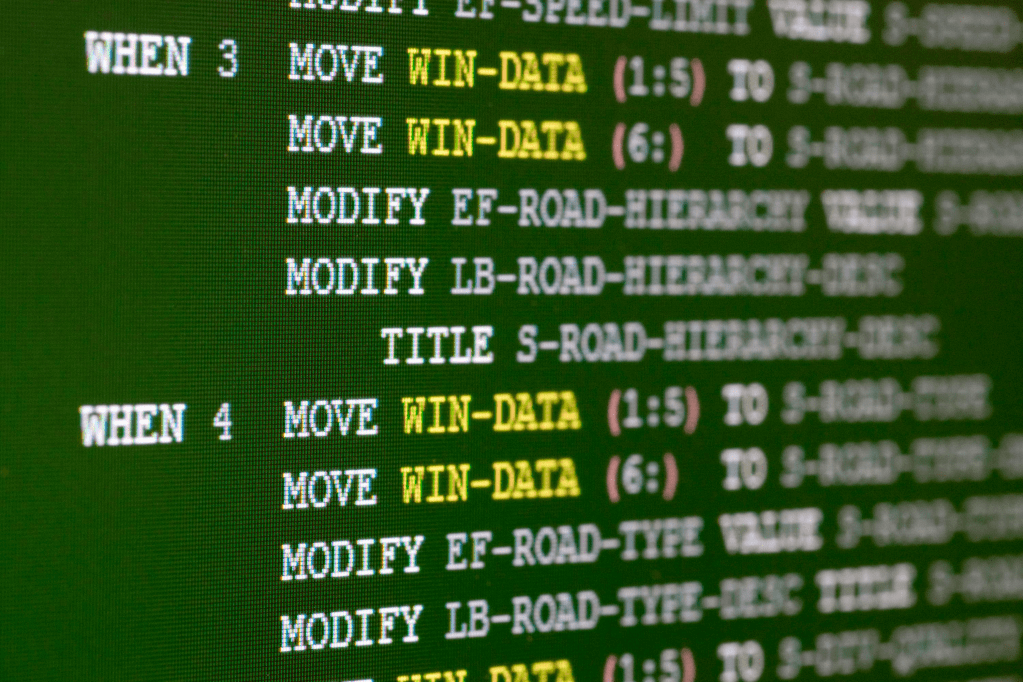
We take technology for granted. Institutions keep building upwards not realizing that their entire systems are built around cardboard foundations.
The FAA failure yesterday brought a dark realization to light, most big technological systems used by governments and big institutions rely on old and unsustainable technology. Why? Because it is way cheaper.
Thousands of fligths in the U.S. were cancelled yesterday because of a “corrupt database file”. This comes to show how fragile our society is. One unforeseeable error made 50 years ago by a small team of programmers can lead to catastrophe.
The FAA has spent years trying to modernize their Notice to Air Mission or NOTAM system (which caused the failure), they are claiming to have been trying to upload it to the cloud. Additionally, they claim that “it was designed to be redundant, so, in theory, the entire critical system won’t go down just because one part of it experiences an outage” says Rich McCormick, Director of Labor Analysis at the FAA (1). Surprisingly, not revising and updating any of the source code created in 1947 can bring problems after a while.
Anyways, to me, this is just the icing on the cake. We could keep planes on the ground and wait until it was fixed. Everyone was safe and only unsatisfied clients felt the consequences. However, what if I told you that around $3 trillion of daily transactions rely on 40 to 50 year old COBOL code?
COBOL is a programming language from the 50s, it was designed to code financial systems and it helped digitlize banks and financial institutions… IN THE 50s! The problem is not that COBOL is bad, however, that the popularity of COBOL has dropped so much that there is not enough people to take care of it. If a major problem struck, not a lot of people would be able to fix it. Unsurprisingly, this going downhill every year as retirees stop working and young people fail to take their jobs.
However, this is not the full story, as COBOL can be seen in many more key industries that should not be prone to errors of this caliber:
- Healthcare: 60 million patients
- Banking: 95% ATM transactions
- Travel: 96% of the bookings
- Social security: 60 million lines of code
- Point of sale: 80% of all transactions daily
- IRS: 50 million lines of code
As seen above, the demand for COBOL is massive, specially for critical sectors such as Healthcare, Banking system and Public Institutions’ systems. However, the popularity is dropping massively every year. With this knowledge, we are presented with three choices.
First choice, we invest in migrating to newer, and more popular programming languages that can be maintained. Hopefully saving us from future failures as the one seen in the NOTAM system.
Second choice, companies invest in training and benefitting young COBOL programmers in order to subsidize and motivate younger generations to learn and improve COBOL. “Just because a language is 50 years old, doesn’t mean that it isn’t good,” said Donna Dillenberger, an IBM Fellow.
Third Choice, we let institutions save all the money they need for profits rather than technological innovation and remodernization. Then, we wait for a massive failure to corrupt our society, scare the people and inhabilitate whichever of these key industries for however long it is needed. All of this, while bringing chaos and ruining lives of innocent people.
It is important to remind you of the reason why these systems are not being changed.
Commonwealth Bank of Australia, for instance, replaced its core banking platform in 2012 with the help of Accenture and software company SAP SE. The job ultimately took five years and cost more than 1 billion Australian dollars ($749.9 million).
https://www.reuters.com/article/us-usa-banks-cobol-idUSKBN17C0D8
The choice is up to… you guessed it! Financially driven individuals who do not see the fragility of technology and are hired purely for making profits and growing institutions. They are very smart and good at doing just that, but should not have this decision on their shoulders. It should be regulated and imposed by governments in order to help/force companies to transition into a new era of technological safety.
Useful Links & Bibliography:
- FAA Key People: https://www.faa.gov/about/office_org/headquarters_offices/afn/offices/finance/key_officials
- IEEE Spectrum: https://spectrum.ieee.org/top-programming-languages-2022
- BBC Article on the NOTAM failure: https://www.bbc.com/news/world-us-canada-64236047
- NOTAM initiative for modernizing: https://www.faa.gov/about/initiatives/notam
- COBOL use in Banking Sectors: https://ijarsct.co.in/Paper5405.pdf
 Victor Ovejero
Leave a comment